Milena from Krushari, together with the United Nations High Commissioner for Human Rights Zeid Ra’ad Al Hussein, opened a Bulgarian exhibition in Geneva a
5 December 2016
Who is Milena, where is Krushari and how did the UN High Commissioner for Human Rights met her?
Milena Stoyanova is one of the thousands of children who grew up in a social institution for children with intellectual disabilities, in this particular case – placed in the village of Krushari – a village that is located in the outskirts of northeast Bulgaria where the sky descends so low over the earth that you feel being closer to the Outer space rather than to any other human being; a place where you can walk for hours along the road and still meet nobody.
It was only natural that when Milena turned 18, she was placed under guardianship because of her intellectual disability and the court ruled that she is incapable of taking care of herself.
However, fortune smiled on Milena and she became one of the "children of deinstitutionalization". But even more important was the fact that this gave her the chance to take part in the Supported Decision-Making Pilot Project run by the St Nicholas the Wonderworker Foundation in the town of Dobrich. A support network was formed around Milena and that convinced the court that she was able to manage her affairs with the assistance from her support network. The results were quick and Milena became one of the first cases of abolished guardianship over persons with intellectual difficulties in the town of Dobrich (followed by five more for the next two years).
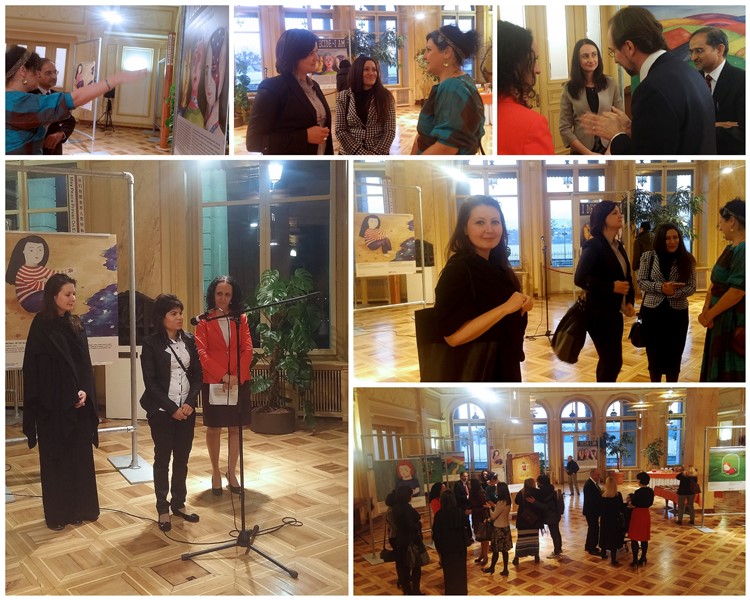
Thus, thanks to all that, Milena took her journey from the institution inKrushari to the Palais Wilson, the headquarters of the Office of the UN High Commissioner for Human Rights in Geneva, to become the ambassador of the change. The particular occasion was the celebration of the 3rd December – the International Day of Persons with Disabilities. Milena stood beside the High Commissioner for Human Rights and opened the Bulgarian exhibition "I decide = I am". She sent a message to the world – Everything is possible!
This is one of the happy ending stories of the Next Step Program, which helps people with intellectual disabilities or mental health problems in Bulgaria, who have been, or are in a risk of being, placed under guardianship, to prove that a new formula is possible so that these people can exercise their rights according to their own wishes and preferences. The Next Step Program has been developed during the last 4 years by the Bulgarian Centre for Not-for-Profit Law (BCNL), the Bulgarian Association for Persons with Intellectual Disabilities - BAPID (with 6 pilot projects managed by Parallel World Association in Plovdiv, the St Nicholas the Wonderworker Foundation in Dobrich, the Zakrila–Lovech Association in Lovech, the Regional organization for support of persons with intellectual disabilities in Vidin, the Autism Association in Sofia and the Innovation Association in Bobovdol) and the Global Initiative in Psychiatry Foundation - Sofia.
Bulgaria on three continents?!
Sending the message of the Supported Decision-Making Pilot Projects across the world, the success of the new formula, what it means to be equal regardless of your disability, what it means to have support instead of sufficiency of law and deficiency of rights – all of these was pictured in a wonderful exhibition of 16 paintings by the talented artist Nadezhda Georgieva (Nad) accompanied by the inspiring and thrilling texts created by Yana Buhrer Tavanier. The exhibition and its message had a strong effect on the international community working in that field. It was presented during the eighth International Disability Law Summer School at NUI Galway, Republic of Ireland, where it was opened by the Minister for Children and Youth Affairs of Ireland; it visited the Congress of Peru for a week in October, it was part of a seminar for law students, lawyers and artists in Almaty, Kazakhstan, before finally arriving in Geneva, Switzerland. The UN Special Rapporteur on the Rights of Persons with Disabilities Ms Catalina Devandas Aguilar and her team extended an invitation to the team of the Next Step Program and helped the Bulgarian group turn into the stars of the event. The Bulgarian partners of the exhibition are the Bulgarian Centre for Not-for-Profit Law (BCNL), the Bulgarian Association for Persons with Intellectual Disabilities (BAPID), the Global Initiative on Psychiatry Foundation – Sofia and Maria's World Foundation.
Those things that will be really of importance …
The most important thing for the Next Step Program, the persons with disabilities who are part of the pilot projects, their families and relatives is actually the bill for physical persons and support measures. After six years of effort, this draft law is still stuck at first reading at the National Assembly. The opportunity to be passed at second reading within the 43rd National Assembly is slightly small. Naturally, every delay in providing an irreversible legal solution for ensuring justice for all potential recipients of the support measures is worrying. Every one of them can fall in the vortex of guardianship and never escape, like Mr Rusi Stanev who is still under guardianship even though he successfully sued Bulgaria before the European Court of Human Rights in Strasbourg. Which is a pity… especially after you have seen that a different solution is also possible.
To learn more about the support campaign for the adoption of the bill, visit www.equalrights.bcnl.org and join it. Even discussing it at home with your loved ones is important for us.
The BCNL team would like to express its special gratitude to Ambassador Deyana Kostadinova, the Permanent Representative of the Republic of Bulgaria to the United Nations, for her involvement in the initiative, as well as to the journalist Maria Cherneva and the cameraman Anna Andreeva from the Bulgarian National Television, who brought this story to millions.
Milena Stoyanova is one of the thousands of children who grew up in a social institution for children with intellectual disabilities, in this particular case – placed in the village of Krushari – a village that is located in the outskirts of northeast Bulgaria where the sky descends so low over the earth that you feel being closer to the Outer space rather than to any other human being; a place where you can walk for hours along the road and still meet nobody.
It was only natural that when Milena turned 18, she was placed under guardianship because of her intellectual disability and the court ruled that she is incapable of taking care of herself.
However, fortune smiled on Milena and she became one of the "children of deinstitutionalization". But even more important was the fact that this gave her the chance to take part in the Supported Decision-Making Pilot Project run by the St Nicholas the Wonderworker Foundation in the town of Dobrich. A support network was formed around Milena and that convinced the court that she was able to manage her affairs with the assistance from her support network. The results were quick and Milena became one of the first cases of abolished guardianship over persons with intellectual difficulties in the town of Dobrich (followed by five more for the next two years).
Thus, thanks to all that, Milena took her journey from the institution inKrushari to the Palais Wilson, the headquarters of the Office of the UN High Commissioner for Human Rights in Geneva, to become the ambassador of the change. The particular occasion was the celebration of the 3rd December – the International Day of Persons with Disabilities. Milena stood beside the High Commissioner for Human Rights and opened the Bulgarian exhibition "I decide = I am". She sent a message to the world – Everything is possible!
This is one of the happy ending stories of the Next Step Program, which helps people with intellectual disabilities or mental health problems in Bulgaria, who have been, or are in a risk of being, placed under guardianship, to prove that a new formula is possible so that these people can exercise their rights according to their own wishes and preferences. The Next Step Program has been developed during the last 4 years by the Bulgarian Centre for Not-for-Profit Law (BCNL), the Bulgarian Association for Persons with Intellectual Disabilities - BAPID (with 6 pilot projects managed by Parallel World Association in Plovdiv, the St Nicholas the Wonderworker Foundation in Dobrich, the Zakrila–Lovech Association in Lovech, the Regional organization for support of persons with intellectual disabilities in Vidin, the Autism Association in Sofia and the Innovation Association in Bobovdol) and the Global Initiative in Psychiatry Foundation - Sofia.
Bulgaria on three continents?!
Sending the message of the Supported Decision-Making Pilot Projects across the world, the success of the new formula, what it means to be equal regardless of your disability, what it means to have support instead of sufficiency of law and deficiency of rights – all of these was pictured in a wonderful exhibition of 16 paintings by the talented artist Nadezhda Georgieva (Nad) accompanied by the inspiring and thrilling texts created by Yana Buhrer Tavanier. The exhibition and its message had a strong effect on the international community working in that field. It was presented during the eighth International Disability Law Summer School at NUI Galway, Republic of Ireland, where it was opened by the Minister for Children and Youth Affairs of Ireland; it visited the Congress of Peru for a week in October, it was part of a seminar for law students, lawyers and artists in Almaty, Kazakhstan, before finally arriving in Geneva, Switzerland. The UN Special Rapporteur on the Rights of Persons with Disabilities Ms Catalina Devandas Aguilar and her team extended an invitation to the team of the Next Step Program and helped the Bulgarian group turn into the stars of the event. The Bulgarian partners of the exhibition are the Bulgarian Centre for Not-for-Profit Law (BCNL), the Bulgarian Association for Persons with Intellectual Disabilities (BAPID), the Global Initiative on Psychiatry Foundation – Sofia and Maria's World Foundation.
Those things that will be really of importance …
The most important thing for the Next Step Program, the persons with disabilities who are part of the pilot projects, their families and relatives is actually the bill for physical persons and support measures. After six years of effort, this draft law is still stuck at first reading at the National Assembly. The opportunity to be passed at second reading within the 43rd National Assembly is slightly small. Naturally, every delay in providing an irreversible legal solution for ensuring justice for all potential recipients of the support measures is worrying. Every one of them can fall in the vortex of guardianship and never escape, like Mr Rusi Stanev who is still under guardianship even though he successfully sued Bulgaria before the European Court of Human Rights in Strasbourg. Which is a pity… especially after you have seen that a different solution is also possible.
To learn more about the support campaign for the adoption of the bill, visit www.equalrights.bcnl.org and join it. Even discussing it at home with your loved ones is important for us.
The BCNL team would like to express its special gratitude to Ambassador Deyana Kostadinova, the Permanent Representative of the Republic of Bulgaria to the United Nations, for her involvement in the initiative, as well as to the journalist Maria Cherneva and the cameraman Anna Andreeva from the Bulgarian National Television, who brought this story to millions.