Lab4e: From Bulgaria to the Netherlands and back
This is the story about the journey of a group of Bulgarian social enterprises searching for inspiration and courage.
 This is a first party story of Pavleta Alexieva – part of the executive team of BCNL project “Know-How Lab for Social Entrepreneurship” (Lab4e) as an expert on social innovation, geared towards improving the process of providing access to the labor market for persons with disabilities - in other words, a guide of the exchange group in the Netherlands.
Our trip started in a trivial way – with a meeting at the Sofia airport, each of us had left home and work place hoping to see something different, something to get inspiration from and courage to dream. We gathered a group of over 10 people – each of us - a professional in his/her area and with a role in his/her organizations’ teams. And everyone was curious to know who takes part in the process of providing access to the labor market in the Netherlands to persons having difficulties become part of it and how.
Diving in
As early as we arrived in Apeldoorn we dived into the topic. Freddie Wools, representative of the De Passerel foundation and its formal director (De Passerel is one of the biggest organizations- providers of social services and developing social entrepreneurship in Apeldoorn, the Netherlands) introduced us to the philosophy behind all measures and mechanisms that Netherlands is using to address the problem with employment of people with disabilities or with other problems, that hinder them to reach the labor market. An accent in this philosophy is the Ladder of participation - the participation understood as social inclusion that can be achieved throughout creating a real labor environment, ensuring a work place for everyone according to his or her abilities, needs and preferences.
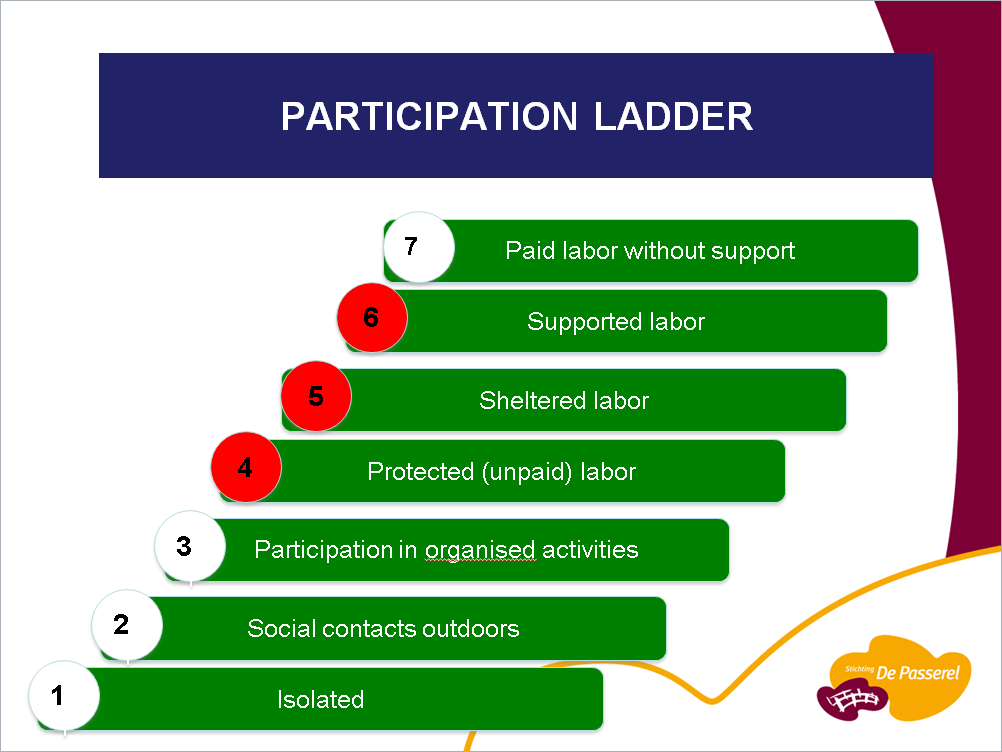 The ladder is a well systematized conception that visualizes in a simple way the links between the separate measures and roles of the government, the municipality, the labor bureau, the providers of social services and at the end – the whole society – it order to provide universal solutions for reintegration of vulnerable people to the labor market.
Something familiar but not quite – the participation in the labor process as a value and an instrument for social inclusion.
On the second day of our stay we had the possibility for visit DROOM! – a daughter company of an organization whose fundamental activity is to offer social services for persons with disabilities. In DROOM! we saw how entrepreneurship, inclusion through participation in real labor environment and independence for persons with different disabilities can go hand in hand. In the participation ladder DROOM! is focused on one of the main stepping stones - ensuring of a protected labor without remuneration for persons with disabilities (and not only) as part of the social support for their development and inclusion. The country admits and even encourages such measures - it ensures remuneration for the people that use them – in the form of social payments or unemployment payments.
Around 16 persons per day who cannot reach to the labor market by themselves because of different reasons (intellectual disabilities, physical disabilities or refugees) go to work there. There is an individual plan for everyone with concrete results that are expected and everyone works for real having the responsibility for a certain activity in the whole production process. In some cases the activities are small – from cutting the butter for the apple pie – a trademark of DROOM!, and peeling and cutting apples with a special machine or making of sandwiches in the restaurant , to handling the orders for coffee or other beverages. For part of the people this is a constant workplace, for others – a temporary condition, but they all receive the opportunity to take part in a more meaningful, dignifying and useful everyday life.
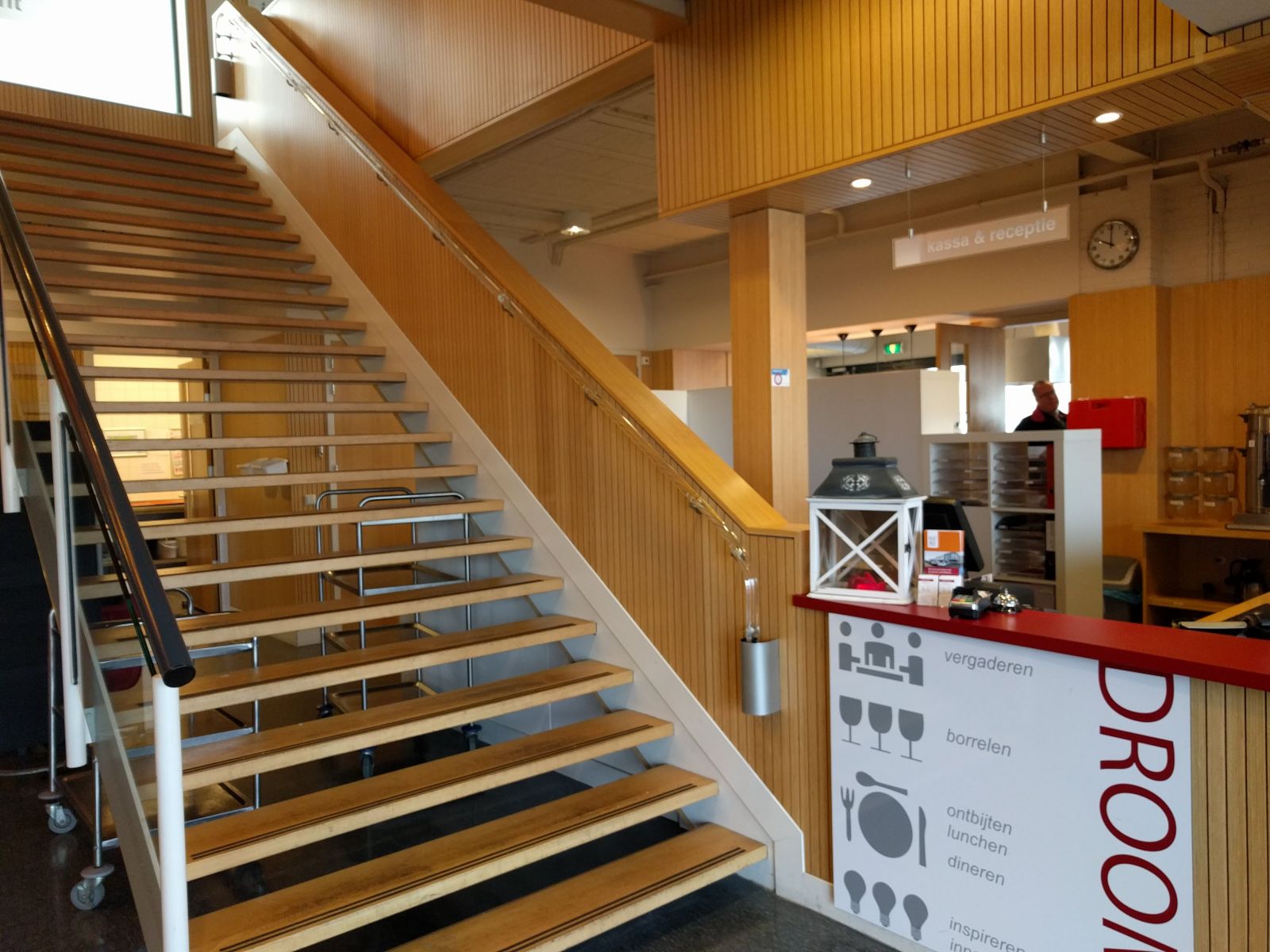 DROOM! produces and sells goods and services within a few entrepreneurial activities – a bakery, that produces apple pie which is being sold in shops; a restaurant for the people working in the buildings nearby with a lunch menu and catering that can be ordered; rental of halls for business meetings.
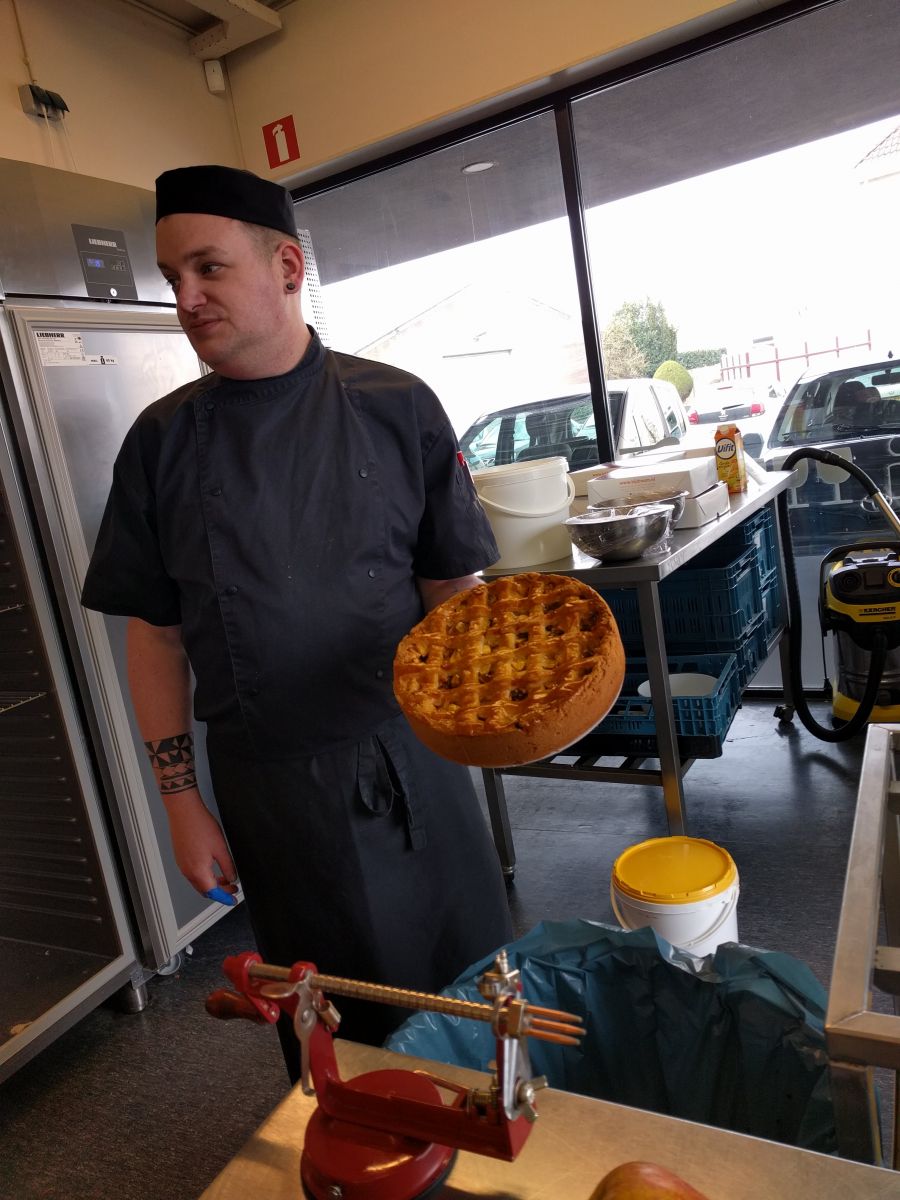
One of our guides in DROOM! was Denis. Denis works in the restaurant and said that he likes it a lot. He used to work in the bakery but it was too hot for him so he asked his mentor for a change.
A well-known fact that no one pays special attention to – the suitable employer is just as important as the suitable job.
In the afternoon we met Mark – a young specialist in the sphere of HR services who works mainly with companies. He told us about the process of matching the person, his abilities and preferences on one side and the work environment and culture in the company that offers a free position on the other. The focus in our talk with Mark was that in the recipe for a successful labor integration and realization the employer and the work environment play important role. It’s not enough that the work itself is suitable and is liked by the person that has difficulties in reaching to the labor market. It is just as important to measure the work environment, the values and the relations with coworkers and whether the person will fit in them.
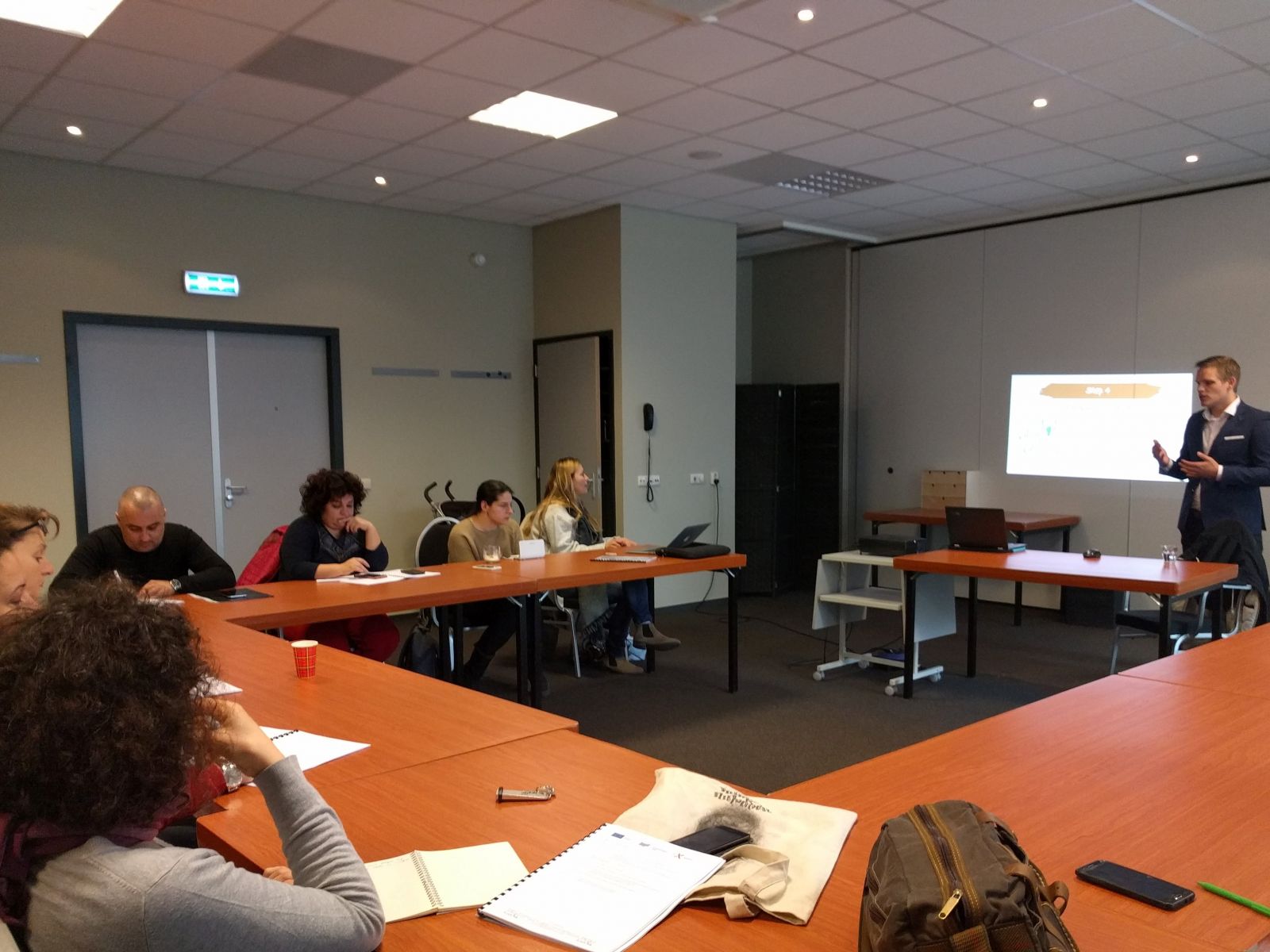 Mark told us about the typical marketing approach that is being used when finding the suitable workplace at a suitable employer – the Sandwich principle : the opportunities for the person are being presented without being silent about the difficulties that he has, but some compensation mechanisms are being offered as well - so that the maximum adaptation can be reached and neither the employer is harmed by the labor productivity, nor the person is hindered from the opportunity to take part in different levels of the work process.
It is not worthy to recognize what the person “cannot do”, it is worthy to recognize what the person “can do” – a universal starting point that is relevant for everyone meets difficulties to reach to the labor market, no matter the reason – an intellectual, physical or social disabilities.
The meeting we had on the third day of our trip helped us to see the evaluation of work efficiency as a process. We visited the Lucrato foundation - a municipality enterprise that is managing a little factory where unemployed people (again – because of different reasons) go to work in a protected environment. Based on systematic observation and individual approach everyone’s labor opportunities are being measured – as a complexity of abilities, interests, and needs. Lucrato works in partnership with consultants from the labor bureau who collect information for free work places. A part of the people are being leveled to Lucrato by the labor bureau that is responsible for paying the compensation for unemployment and whose purpose is to understand what are the abilities of the person and what work would match. The motivation of people themselves to come to work in Lucrato is exactly to get compensation for unemployment – if they don’t go to work the labor bureau will stop the payment. Based on the observations over the work abilities of the workers in Lucrato they are being leveled either to forms of supported labor (when they need more support to improve or build labor skills) or directly to free positions on the primary labor market. In this process the good partnership between such places as Lucrato and the labor bureau in the municipality is important in order to achieve the desired result – a sustainable and social reintegration of people.
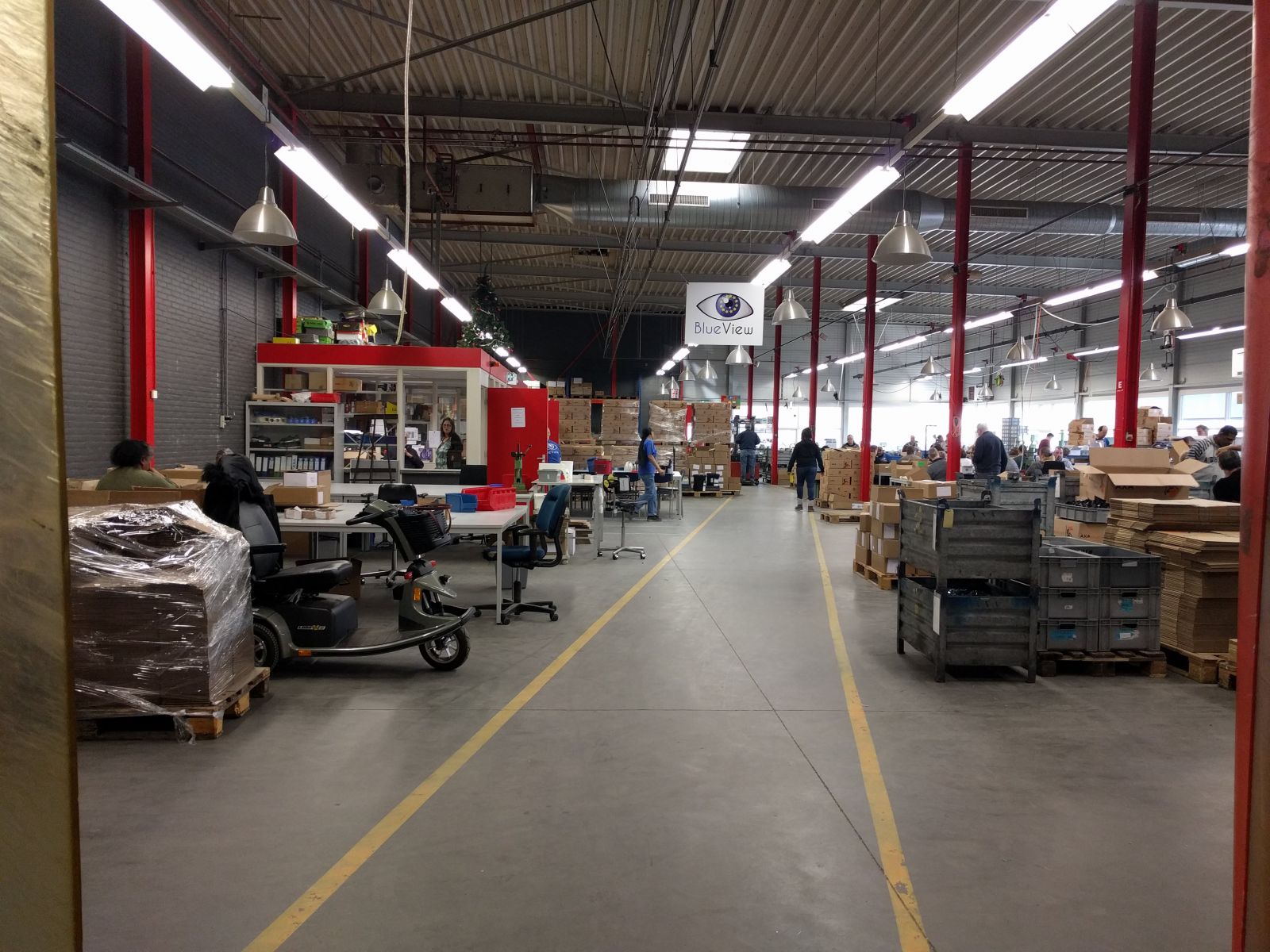 The mixture of vulnerable groups was distinctively visible in Lucrato. The conclusion I made for myself was that in the Netherlands the purpose isn’t to create special isolated places for the “different” people but to create conditions for communication and equality between everyone – throughout participation in the labor process.
To see the progress in person’s development you have to observe, write down your observations and analyze them – in that way you can achieve consistency in the support and sustainability in the desired outcomes.
The picture of finding the right job for a particular person was completed by the presentation of one of the modules of INVRA – an online system which is being used from every professional whose activity is related to reintegration on the labor market.
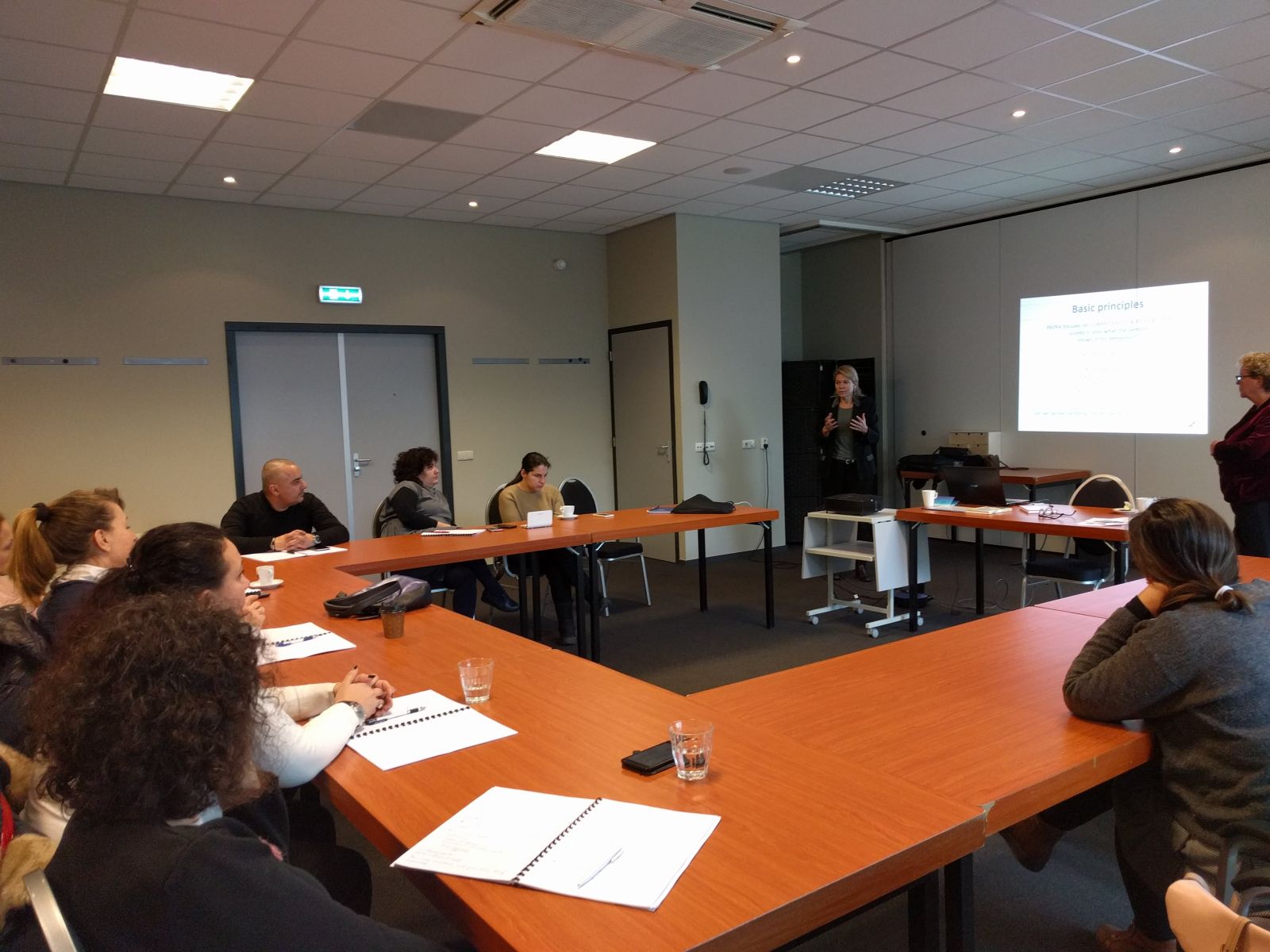
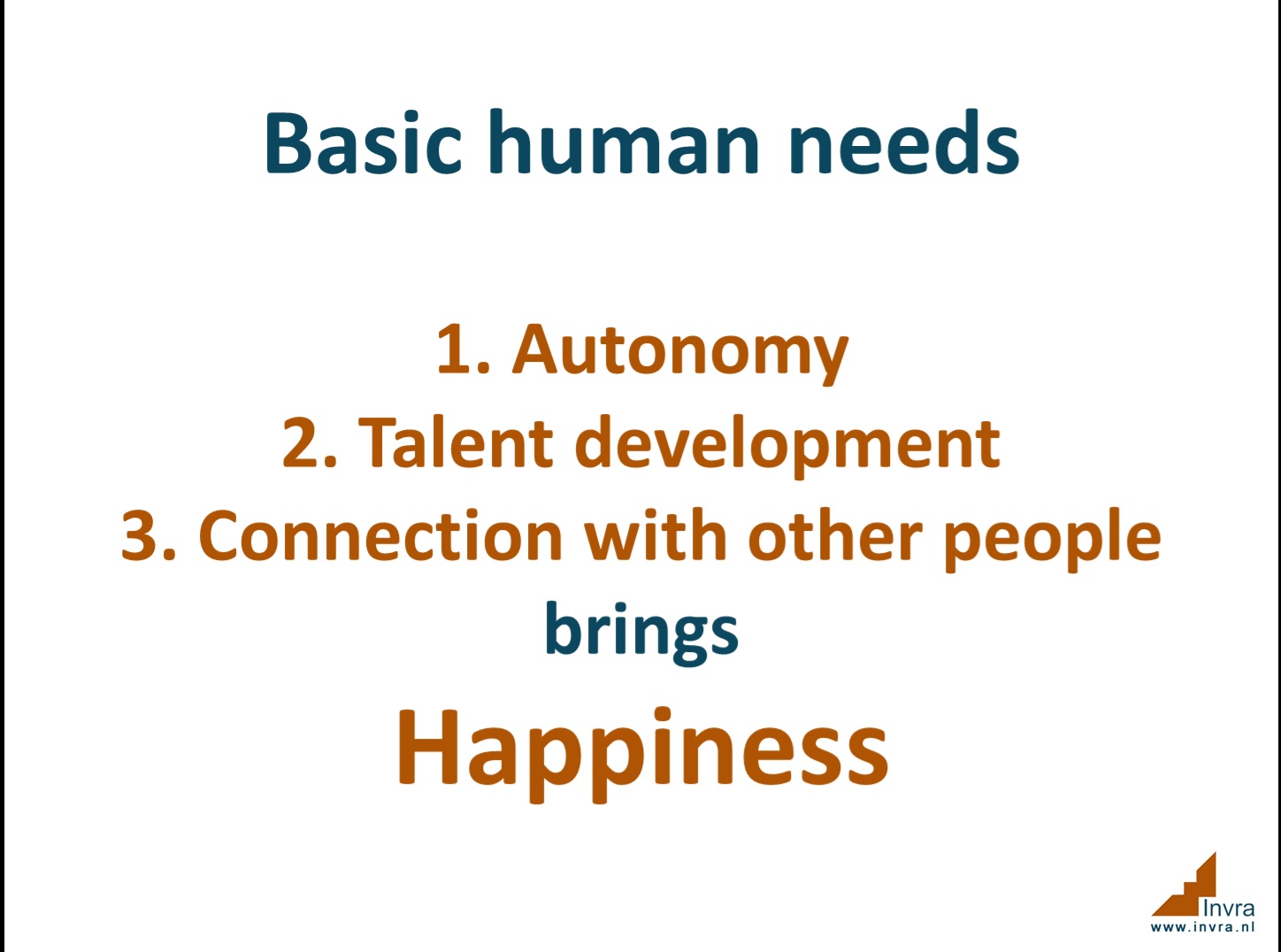
The main principles that INVRA is built on are identified based on a research of the Dutch understanding of “inclusion” as a value. These principles are considered while developing the questionnaires, included in the module of INVRA, and they are autonomy, of talent development and connection with other people.
Organizing the activity of the organization in an entrepreneurial way gives the possibility to reach for the social purpose on a larger scale. This is the desired outcome, for which time and effort are needed.
Our study visit finished with a visit at Foenix - on organization that started as a volunteer initiative 30 years ago, and now is a chain of thrift shops in Apeldoorn, and fourth one is about to be opened. Foenix works in tight collaboration with Lucrato – some of the people for whom the evaluation shows that need mentorship and instructions to improve certain work and social skills (communication in a team, constant work presence and similar) and who are still not reaching the level of finding and keeping a job on their own are being directed to Foenix.
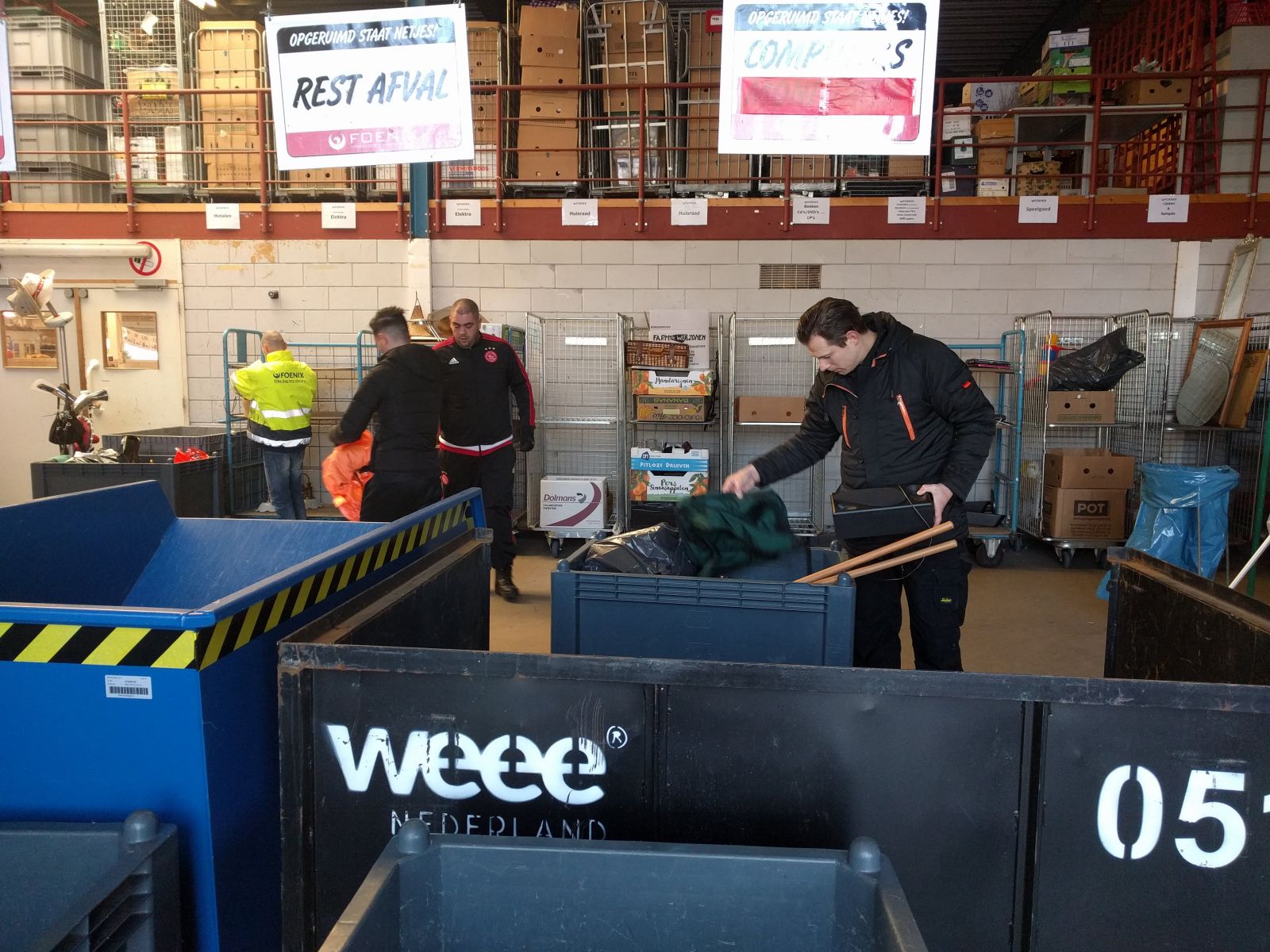
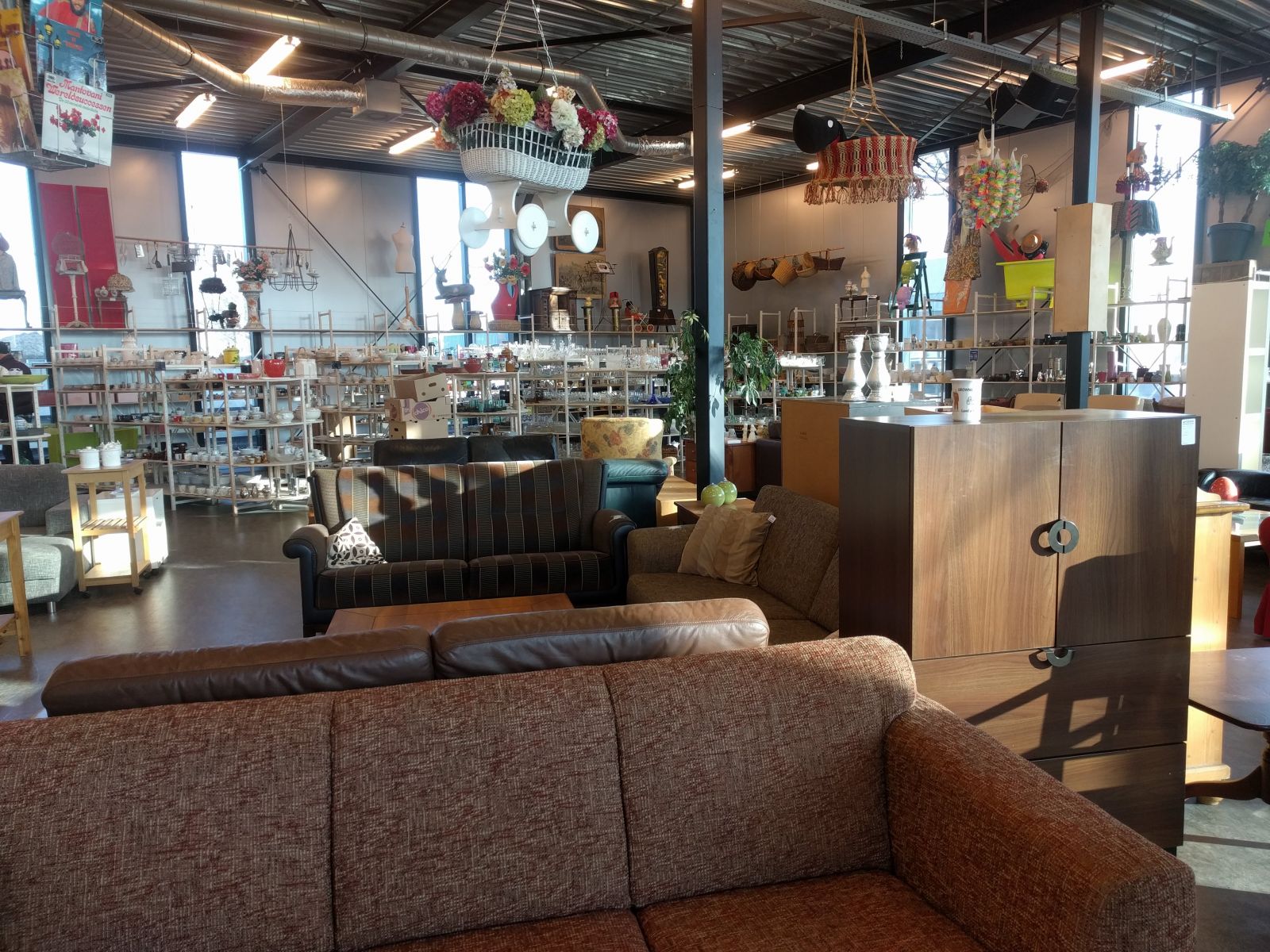 Fenix manages 3 thrift shops – for household goods, electronics, furniture, clothes and toys, and a workshop for repairing and selling second hand bicycles. For over 30 years they have managed to achieve a good image in the society and keep investing in supporting that image and attracting new clients. Besides social media, another tool they use is social events – such as Ladies nights, auctions of objects with a higher antique value and others.
And at the end - what actually we had learned and what provoked us
To work in a real environment encourages the person:
- To be autonomous, which is a precondition for having an independent life in the society
- To develop his/her skills and talents which increases his/her self-confidence and dignity
- To communicate with other people and this makes him/her part of a team, part of a community.
The Dutch had come to the conclusion that everything in its complexity makes the recipe for happiness and focused their efforts and resources (in this case – part of the system for employment and social care) to achieve this for the people.
The links between the systems and the partnership between the stakeholders on different levels:
- motivate the person who needs support to find a job, to be responsible to the opportunities he/she receives;
- make it possible the measures with the highest intensity (regarding the public resource involved) to be directed to those who indeed need them. For others the system foreseen various exits on different levels and they are stimulated to use these exits. That way the dependency on the system is brought to a minimum.
The entrepreneurial activities are being organized in a way that they both serve a social purpose and fit adequately in the existing market of goods and services. Dividing the production process and describing each step with photos and pictures, so that the instructions can be suitable for the abilities of the people that must learn them – all such efforts aim at making the participation easier. At the same time and with the same importance stands the ongoing analysis of the economic market for the relevant entrepreneurial activity, the feedback from the clients about the quality of the goods they bought and the services they used, the advertisement and the financial management - all of this is being done by a team that has the needed skills and knowledge.
Providing support to find and keep a job by people from different vulnerable groups as a mixed group increases the social effect of the social enterprises. The joint contribution to all parties in the process of support allows the social enterprises to create varied social cultural environment (something that’s typical for the jobs at the primary labor market), to match different financial flows from different systems – employment and social care, to be sustainable and to be key players in the process of labor reintegration – in other words, an irreplaceable ingredient in the recipe for happiness.

The project “Know-How Lab for Social Entrepreneurship” is held under the “Human Resources Development” Operational Program 2014-2020 through joint financing by the European Social Fund in the European Union.