An innovative model to co-create hubs for social enterprises (SEHUBS)
Since January 2021, Bulgarian Center for Not-for-Profit Law has been involved in the development of an innovative model of co-creating hubs for social enterprises that work with different disadvantaged groups or to overcome social problems in different areas (culture, sports, employment, etc.). This is happening within the "SEHUBS Co-creating Hubs for Social Enterprises" project in international partnership with PRISM Impresa Sociale (Italy), Athens Lifelong Learning Institute (Greece) and University of Lodz (Poland). More information on the other activities can be found here.
The model we have created together is based on research and field testing among social enterprises in the four countries - Italy, Greece, Poland and Bulgaria.
Explore the model here >> A BETTER FUTURE FOR SOCIAL ENTERPRENEURS: AN INNOVATIVE MODEL TO CO-CREATE HUBS FOR SOCIAL ENTERPRISES <<
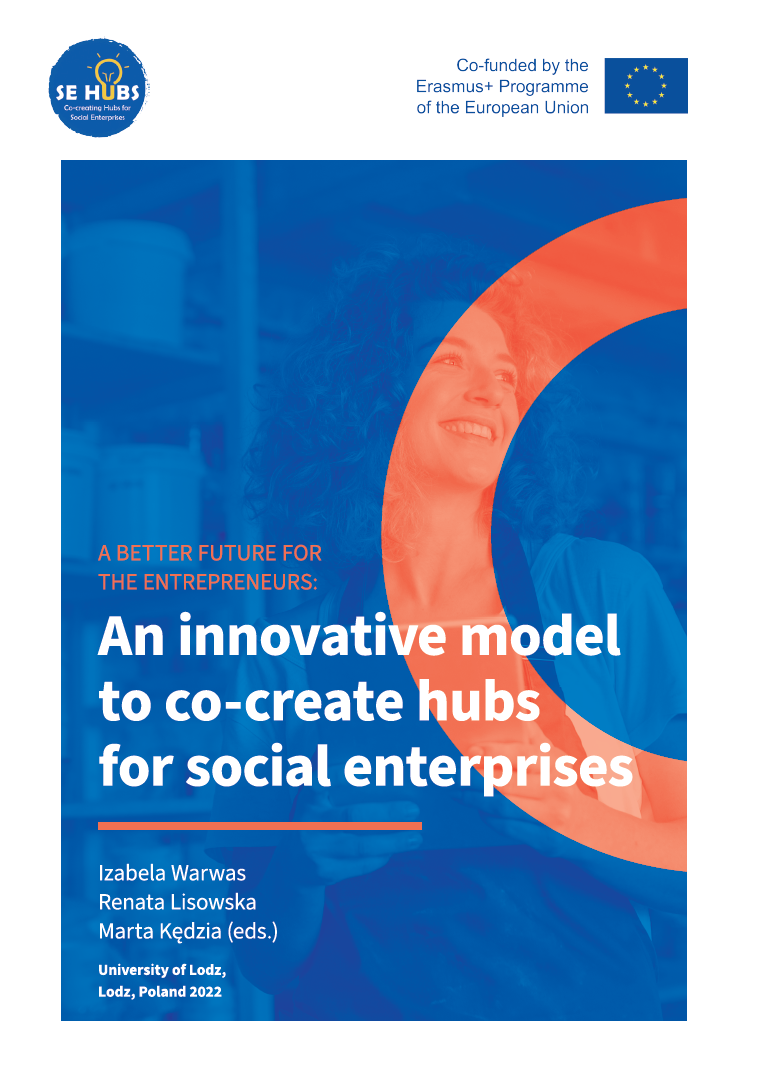
Social enterpreneurship – challenges, strengths and recommentations for development
The first part of the publication presents the context in the four countries - Bulgaria, Italy, Poland and Greece - and the framework for social entrepreneurship at European level.
Interesting highlights include the number of social enterprises in each country and the number of people employed in them. It is noteworthy that in Italy, with a population of nearly 56 million people, there are as many as 94 030 social enterprises, while in Bulgaria, with a population of 6.92 million people, 2249 self-identify as social enterprises (data from the NSI), but only 34 are listed in the Social Enterprise Register. Also for Bulgaria there is no data available on the number of persons employed in social enterprises, while in Italy the number is nearly 846 thousand.
The development of the social entrepreneurship environment would allow for a wider application of models to co-create Hubs, networking and collaborations between social enterprises themselves.
One of the interesting themes that the model develops is dedicated to attracting and retaining highly qualified staff with good management skills and experience. This challenge is linked to the invariably higher wage costs of highly skilled staff, given that social enterprises generally have limited capacity to offer competitive wages compared to other sectors of the economy. At European level, there is little data and research on the subject, although human resources - managers, employees, volunteers - play a key role in the success of social enterprise.
In the second part of the model, you will learn about the 12 training topics developed by the partners as part of the capacity development program for the social enterprise community in the Hubs:
- Community building and responding to community needs
- Entrepreneurship orientation
- Networking
- Social impact
- Finance (how to fund your company)
- Internal and External Communication
- Communication with people with special needs
- Coaching
- Mentoring
- Human Resources Management
- Intercultural Management
- Facility and Space
Best practices, role models and case studies of social enterprises with the most diverse profiles from the four European countries are presented as annexes to the model. The annexes can be read and shared from the project website: www.se-hubs.eu
______________________________
.png)
The material was prepared in the framework of the „SEHUBS Co-creating Hubs for Social Enterprises“ project (621421-EPP-1-2020-1-IT-EPPKA3-IPI-SOC-IN). This project has been funded with support from the European Commission. This material reflects the views only of the authors, and the Commission cannot be held responsible for any use which may be made of the information presented therein.
.jpg)